
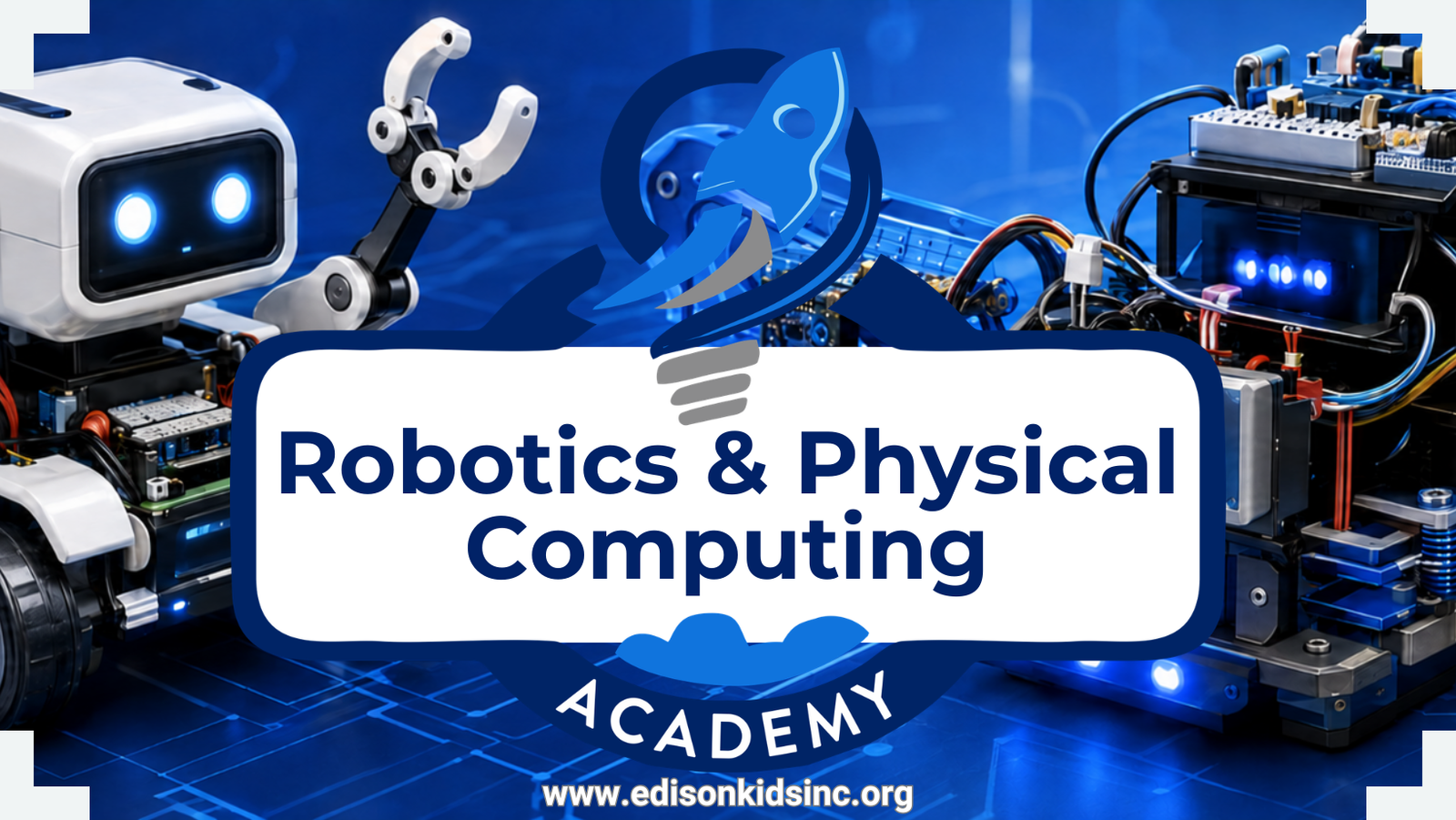
15 Weeks of Coding, Electronics, Robotics & Intelligent Systems
Students become programmers, electrical engineers and inventors as they learn how code can interact with the physical world.
In this 15-week academy, students explore robotics and physical computing using the BBC Micro:Bit and Arduino. They will learn to build electronic circuits, program microcontrollers and use lights, buttons, motors and sensors to create devices that respond to their surroundings.
This is not simply a coding class or a preassembled robotics kit. Each session combines a focused technology lesson with a hands-on engineering challenge that allows students to design, wire, program, test and improve their own working systems.
Workshop Details
- Ages: 9–14
- Dates: Fridays beginning August 28, 2026
- Time: 10:00 AM–12:00 PM
- Length: 15 weeks · 30 instructional hours
- Location: Baldwin, Florida
- Class size: Limited to only 5 students
- Tuition: $1,100 paid in full or five monthly payments of $250
- Equipment: More than $250 in robotics and electronics equipment students keep
- Step Up for Students scholarships accepted
What Students Will Explore
Throughout the semester, students will investigate:
- The role of robots and physical-computing systems
- Inputs, processes and outputs
- Block-based and introductory text-based programming
- Algorithms, sequencing and logical thinking
- Variables, loops and conditional statements
- Electronic circuits and electrical safety
- Conductors, components and breadboards
- LEDs, buttons, buzzers and displays
- Sensors and environmental data
- Motors, servos and mechanical movement
- The BBC micro and its built-in sensors
- Radio communication between micro
- Arduino microcontrollers and electronic components
- Automated and responsive systems
- Troubleshooting hardware and software
- The engineering design process
- Testing, debugging and improving a working prototype
How Each Session Works
Each two-hour session includes:
- Technology Investigation
Students explore a programming, electronics, robotics or physical-computing concept through demonstrations and guided experiments. - Engineering Brief
Students receive a practical challenge with a specific purpose, requirements and design constraints. - Building and Programming
Students assemble circuits, connect components and write the code needed to control their system. - Testing and Debugging
Students identify hardware and programming problems, test possible solutions and improve their designs. - Showcase and Reflection
Students demonstrate their projects, explain how the code and components work together and evaluate the success of their solution.
Students Will Learn To
- Understand how software controls physical devices
- Break a larger problem into smaller, manageable steps
- Create algorithms and translate them into working programs
- Use variables, loops and conditional logic
- Build and understand basic electronic circuits
- Connect and control electronic components safely
- Collect information using sensors
- Program lights, sounds, displays, motors and servos
- Create systems that respond to users and their environment
- Read simple wiring diagrams and component instructions
- Identify whether a problem is caused by hardware or code
- Test, debug and improve a working prototype
- Document and explain their engineering decisions
- Use technology as a tool for solving real-world problems
Sample Projects
Students may be challenged to:
- Program an interactive name badge or digital display
- Create a reaction-time game using buttons and lights
- Build an electronic dice or decision-making device
- Design a step counter or movement tracker
- Create an alarm that responds to light, movement or temperature
- Send messages between two micro using radio communication
- Build a working traffic-light system
- Program a servo-controlled gate or barrier
- Create an automated night-light
- Build a moisture, temperature or environmental monitoring device
- Design an electronic security system
- Program a motorized or moving mechanism
- Develop an assistive device that solves an everyday problem
- Design and build an original smart system as a final project
More Than Building a Robot
Robotics is where coding, electronics and engineering come together.
Every project begins with a question:
What do we want this system to sense, decide or do—and how can we make the hardware and code work together?
Students learn that intelligent devices depend on more than writing a program. A successful system requires carefully connected components, clear instructions, repeated testing and patient troubleshooting.
When a light does not turn on or a motor moves in the wrong direction, students learn to investigate the circuit, examine the code and use evidence to find the problem. They begin to see debugging not as failure, but as an essential part of engineering.
What’s Included
- 15 weeks of expert, hands-on instruction
- A BBC Micro:Bit and supporting equipment
- Arduino microcontroller and electronics components
- Breadboards, wires, LEDs, sensors, motors and servos
- More than $250 in robotics and electronics equipment students keep
- All consumable project and construction materials
- Guided programming and electronics investigations
- Weekly robotics and physical-computing challenges
- Access to computers and specialized tools during class
- Individual guidance in a five-student learning environment
- An original final robotics or smart-system project
- A final student showcase
Who Is This Academy For?
Robotics & Physical Computing Academy is designed for students who:
- Love technology, robots, electronics or coding
- Enjoy building things and figuring out how they work
- Want to move beyond programming on a screen
- Are curious about circuits, sensors and intelligent devices
- Learn best through hands-on projects
- Enjoy solving problems and experimenting with new ideas
- Want to design technology that performs a useful task
- Are willing to test, troubleshoot and keep improving
Students do not need previous robotics, electronics or programming experience. They simply need curiosity, patience and a willingness to experiment and solve problems.
Tuition
$1,100 paid in full for the complete 15-week academy
A monthly payment option of five payments of $250 is also available, for a total tuition of $1,250.
Tuition includes more than $250 in robotics and electronics equipment that students will keep, allowing them to continue building and programming at home after the academy ends.
Enrollment is limited to five spaces, allowing every student to receive personal instruction, support and feedback.
Step Up for Students scholarship funds are accepted.
To use scholarship funds, select Scholarship Payment in the checkout cart. You can then process the payment through the EMA website using your student’s available scholarship funds.

Reviews
There are no reviews yet.